How Do Elastics Correct Your Bite?
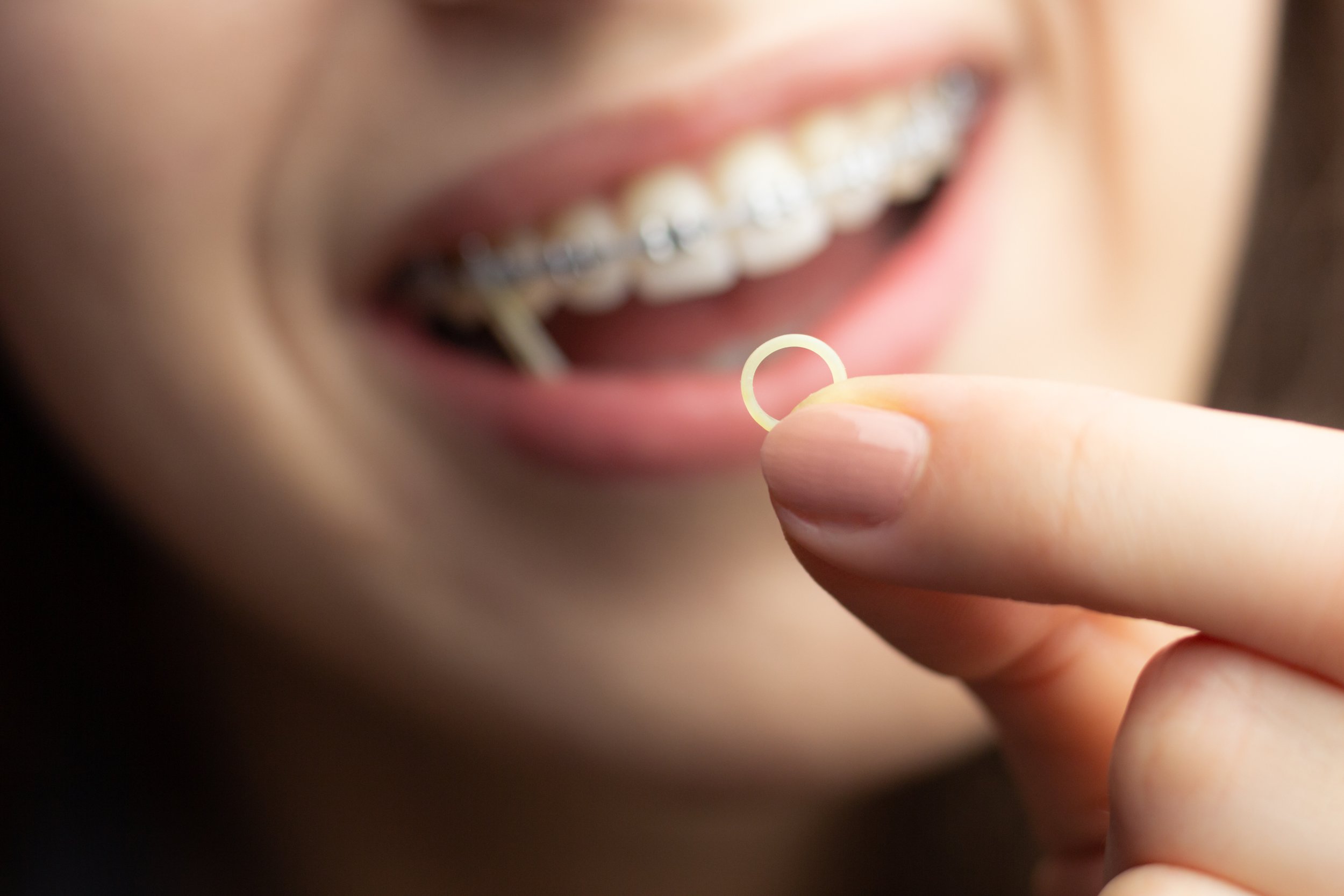
Orthodontic elastics (those small rubber bands you hook onto your braces) play a big role in correcting how your teeth and jaw fit together. They apply gentle, steady pressure that guides the teeth and jaw into healthier alignment over time.
How Elastics Move Your Teeth
Depending on where they’re attached, elastics can shift teeth forward, backward, or vertically. This controlled pressure helps the jawbone to remodel and allows the teeth to settle into the right position.
Elastics come in different strengths and sizes, each designed for a specific job:
Light elastics — used for small movements, like closing minor gaps.
Heavy elastics — apply stronger force to correct major bite issues.
Large‑diameter elastics — stretch across longer distances to fix more complex bite problems.
What Bite Problems Do Elastics Correct?
Elastics are primarily used to correct:
Overbites — The upper teeth sit in front of the lower teeth.
Underbites — The lower teeth overlap the upper teeth.
Crossbite — The upper or lower teeth cross over each other.
Open bite — The bite does not close when biting.
Why Are Elastics Important?
An aligned bite is crucial for chewing, speaking, and overall good oral health. Bad bites can cause various problems such as uneven tooth wear and discomfort.
Follow the orthodontist's instructions for how and when to wear your elastics. The better you follow their instructions, the more successful and timely your treatment will be.
Ready to Begin Your Braces Journey?
Our team at Oasis Kids Dental and Orthodontics is here to guide you every step of the way. Schedule a consultation to get personalized orthodontic care for your child’s smile.